Back to School with … Office Winhov
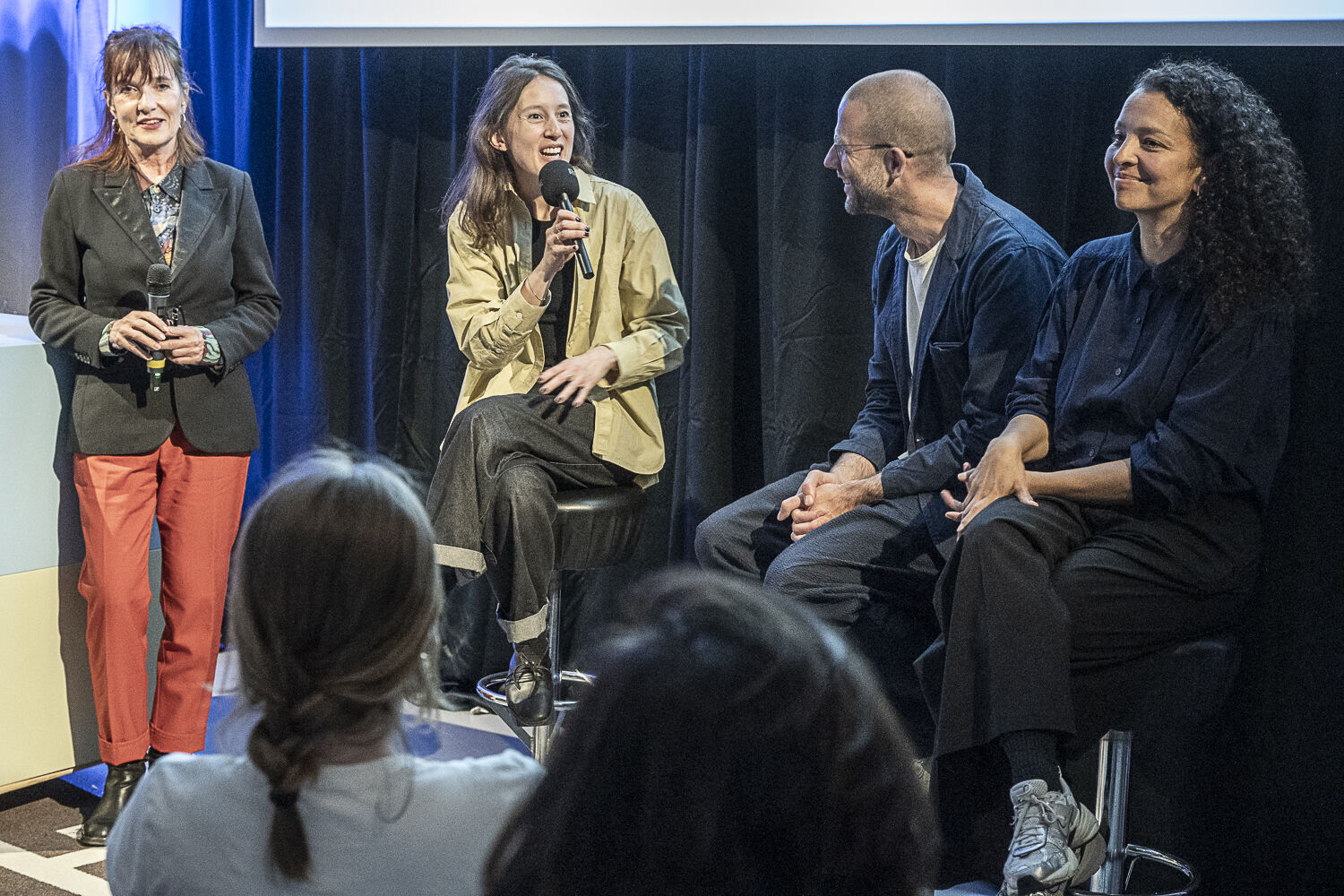
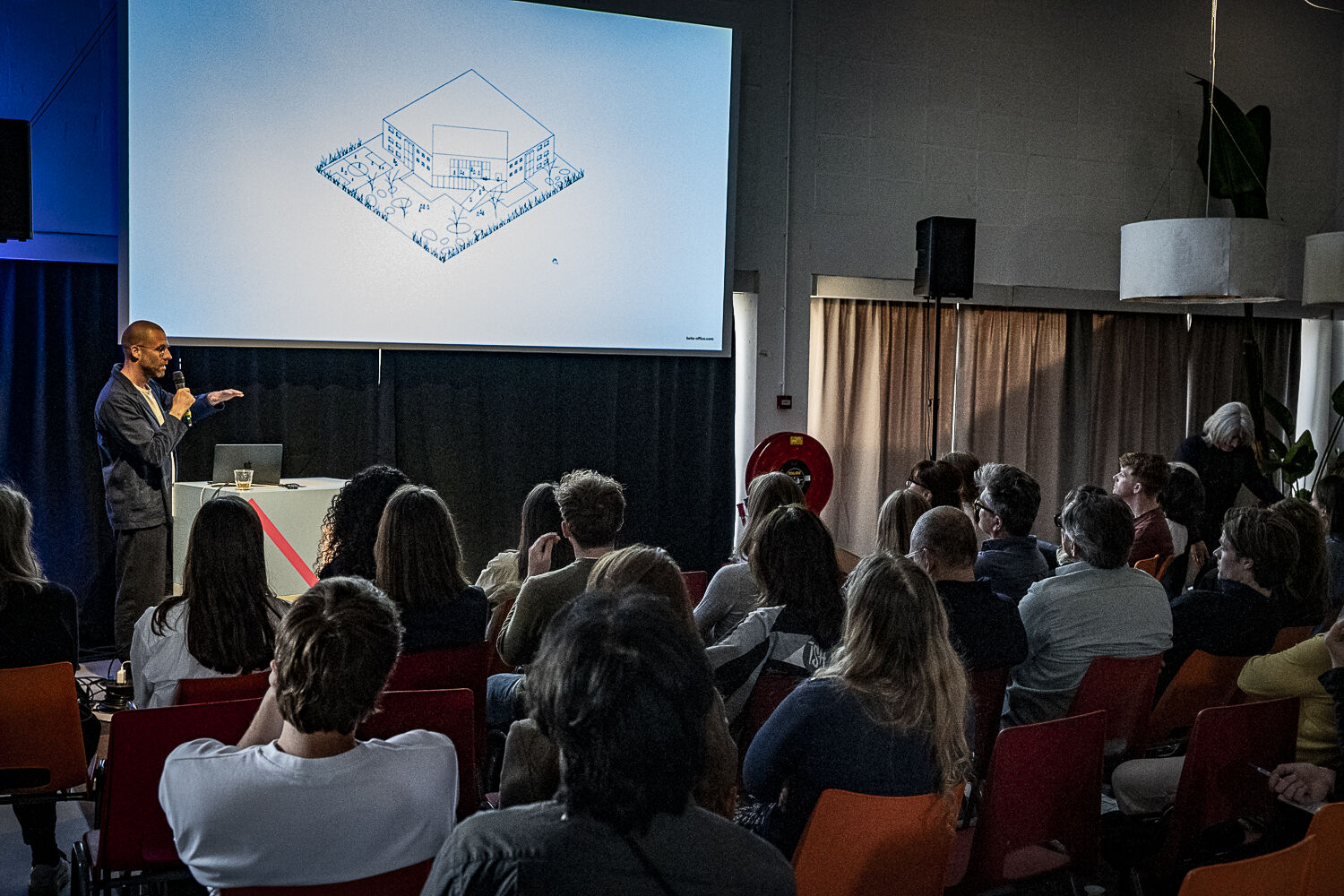
On invitation by Office Winhov and the Independent School for the City, Auguste van Oppen lectured on adaptive reuse strategies in BETA’s projects.
What should we do with architecture from the period between 1965 and 1990? Are we able to take a step back and view the variety of styles used during this period as ‘historical’? Can we adapt the buildings’ dimensions and materials to meet the functional and physical demands of our time?
These were the questions proposed by Office Winhov as the main theme of a series of three events in the ‘Back to School with…’ series. A wide range of projects was covered, from the important renovation of one of the icons of 1970s public architecture, the Public Library of Rotterdam by Van den Broek & Bakema, to the peculiar challenges faced by architects, users and historians alike at the Royal Library in The Hague, a building that manages to be both futuristic and picturesque. However, the most striking aspect was the interest in buildings from that era that are neither iconic nor designed by renowned architects. The thousands of schools designed and built in the 1970s, 1980s and even 1990s are now reaching the end of their lifespan and are either being replaced or renovated.
Historian and activist Wilma Kempinga talked about her campaign to convince school boards to renovate rather than demolish and replace their buildings, while architect Auguste van Oppen discussed the improvisational architecture BETA uses to breathe new life into mediocre buildings from a generation ago.
It may appear that architectural preservation is a cultural process that selects masterpieces from each generation of buildings, but this is no longer the sole – or even the primary – reason to avoid demolishing old structures. Demolition and construction have been revealed to be hugely detrimental to the environment, prompting a shift in the profession’s default position from creating something new to reinterpreting the existing. However, there is more than a material reason behind this shift. Existing buildings, no matter how mediocre their design or how awkward their daily use, still offer possibilities and atmospheric qualities that architects would find almost impossible to realise within the normal constraints of public buildings.
The evenings curated by Office Winhov clearly demonstrated how the issue of architectural preservation and renovation has broadened to encompass not only cultural obligations, but also physical sustainability. It also offers a new source of creativity and hitherto unknown spatial qualities, where the old and the new, the normal and the extraordinary converge.
** text by Independent School for the City **